Hiragana Lesson 1: あ い う え お
 SUNRISE001
Hiragana Chart: Learn All 46 Basic Hiragana with Romaji & Pronunciation
Learning Hiragana is one of the best first steps when you start learning Japanese.
At first, the characters may look unfamiliar. But you do not need to memorize everything at once.
There are 46 basic Hiragana characters.
The easiest way to learn them is simple:
One row at a time.
In this guide, you will learn:
- All 46 basic Hiragana characters
- Romaji pronunciation
- Simple Japanese example words
- Dakuten and Handakuten
- Small ゃ・ゅ・ょ
- Small っ
- Basic reading practice
Let's begin.
What Is Hiragana?
Japanese uses three main writing systems:
- Hiragana(ひらがな)
- Katakana(カタカナ)
- Kanji(漢字)
For beginners, Hiragana is the best place to start.
Hiragana is used in everyday Japanese words, grammar, particles, and verb endings.
For example:
こんにちは
konnichiwa
Hello
ありがとう
arigatou
Thank you
おはよう
ohayou
Good morning
Once you can read Hiragana, learning Japanese becomes much easier.
Full Hiragana Chart
Use this chart whenever you forget a character.
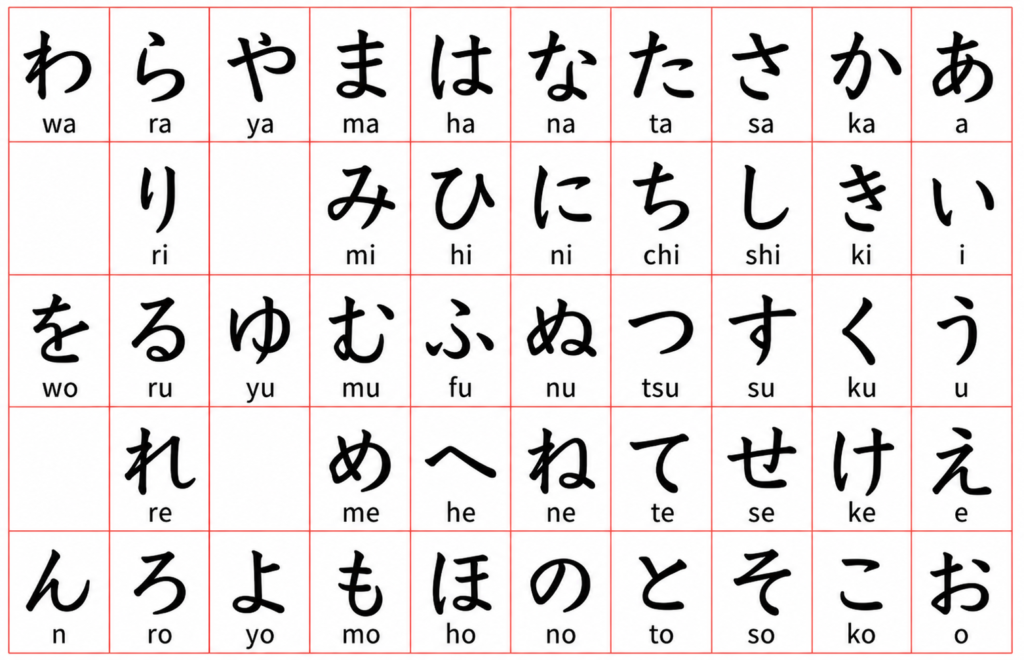
You do not need to memorize this whole chart today.
Start with the first row:
あ い う え お
Then move to the next row when you are ready.
How to Use This Guide
A simple way to study Hiragana is:
- Look at the character.
- Say the sound aloud.
- Write it several times.
- Read a simple word using the character.
- Review it again the next day.
Five or ten minutes every day is enough to make progress.
Part 1: The 46 Basic Hiragana
Lesson 1 — あ Row
These are the five basic Japanese vowel sounds.
| Hiragana | Romaji | Approximate Sound |
|---|---|---|
| あ | a | ah |
| い | i | ee |
| う | u | oo |
| え | e | eh |
| お | o | oh |
Read them aloud:
あ い う え お
a i u e o
Examples:
あさ — asa — morning
いえ — ie — house
うみ — umi — sea
えき — eki — station
おと — oto — sound
Practice
Try reading this without looking at the Romaji:
あ い う え お
→ Individual Lesson: Hiragana Lesson 1: あ・い・う・え・お
Lesson 2 — か Row
| Hiragana | Romaji |
|---|---|
| か | ka |
| き | ki |
| く | ku |
| け | ke |
| こ | ko |
Read:
か き く け こ
ka ki ku ke ko
Examples:
かお — kao — face
き — ki — tree
くち — kuchi — mouth
けさ — kesa — this morning
ここ — koko — here
→ Individual Lesson: Hiragana Lesson 2: か・き・く・け・こ
Lesson 3 — さ Row
Be careful with し.
It is pronounced shi, not “si.”
| Hiragana | Romaji |
|---|---|
| さ | sa |
| し | shi |
| す | su |
| せ | se |
| そ | so |
Read:
さ し す せ そ
sa shi su se so
Examples:
さかな — sakana — fish
しお — shio — salt
すし — sushi — sushi
せかい — sekai — world
そら — sora — sky
→ Individual Lesson: Hiragana Lesson 3: さ・し・す・せ・そ
Lesson 4 — た Row
This row has two special sounds:
ち = chi
つ = tsu
| Hiragana | Romaji |
|---|---|
| た | ta |
| ち | chi |
| つ | tsu |
| て | te |
| と | to |
Read:
た ち つ て と
ta chi tsu te to
Examples:
たまご — tamago — egg
ちず — chizu — map
つき — tsuki — moon
て — te — hand
とり — tori — bird
→ Individual Lesson: Hiragana Lesson 4: た・ち・つ・て・と
Lesson 5 — な Row
| Hiragana | Romaji |
|---|---|
| な | na |
| に | ni |
| ぬ | nu |
| ね | ne |
| の | no |
Read:
な に ぬ ね の
na ni nu ne no
Examples:
なつ — natsu — summer
にく — niku — meat
ぬの — nuno — cloth
ねこ — neko — cat
のむ — nomu — to drink
→ Individual Lesson: Hiragana Lesson 5: な・に・ぬ・ね・の
Lesson 6 — は Row
Be careful with ふ.
It is usually written as fu, but the sound is softer than the English “f.”
| Hiragana | Romaji |
|---|---|
| は | ha |
| ひ | hi |
| ふ | fu |
| へ | he |
| ほ | ho |
Read:
は ひ ふ へ ほ
ha hi fu he ho
Examples:
はな — hana — flower
ひと — hito — person
ふね — fune — ship
へや — heya — room
ほし — hoshi — star
Important
When は is used as a grammar particle, it is pronounced wa.
Example:
わたしは たけしです。
Watashi wa Takeshi desu.
I am Takeshi.
→ Individual Lesson: Hiragana Lesson 6: は・ひ・ふ・へ・ほ
Lesson 7 — ま Row
| Hiragana | Romaji |
|---|---|
| ま | ma |
| み | mi |
| む | mu |
| め | me |
| も | mo |
Read:
ま み む め も
ma mi mu me mo
Examples:
まど — mado — window
みず — mizu — water
むし — mushi — insect
め — me — eye
もの — mono — thing
→ Individual Lesson: Hiragana Lesson 7: ま・み・む・め・も
Lesson 8 — や Row
The や row has only three basic characters.
| Hiragana | Romaji |
|---|---|
| や | ya |
| ゆ | yu |
| よ | yo |
Read:
や ゆ よ
ya yu yo
Examples:
やま — yama — mountain
ゆき — yuki — snow
よる — yoru — night
→ Individual Lesson: Hiragana Lesson 8: や・ゆ・よ
Lesson 9 — ら Row
The Japanese R sound is made with a quick, light tap of the tongue.
Do not worry if it is difficult at first.
| Hiragana | Romaji |
|---|---|
| ら | ra |
| り | ri |
| る | ru |
| れ | re |
| ろ | ro |
Read:
ら り る れ ろ
ra ri ru re ro
Examples:
らく — raku — easy
りんご — ringo — apple
るす — rusu — absence
れきし — rekishi — history
ろく — roku — six
→ Individual Lesson: Hiragana Lesson 9: ら・り・る・れ・ろ
Lesson 10 — わ・を・ん
The final basic Hiragana characters are:
| Hiragana | Romaji |
|---|---|
| わ | wa |
| を | wo |
| ん | n |
わ is pronounced wa.
を is usually used as a grammar particle. It is written as wo, but in modern Japanese it is normally pronounced o.
Example:
みずを のみます。
Mizu o nomimasu.
I drink water.
ん represents the sound n.
Examples:
ほん — hon — book
にほん — nihon — Japan
せんせい — sensei — teacher
→ Individual Lesson: Hiragana Lesson 10: わ・を・ん
You Learned the 46 Basic Hiragana!
If you can recognize the characters above, you have completed an important first step.
You do not need to read them perfectly yet.
Go back to the Hiragana chart whenever you forget a character.
That is completely normal.
Next, let's look at some extra Hiragana sounds.
\ 最新情報をチェック /